Leimert Park is fierce with resilience, braving the turbulence of
societal change, urban development, and changing demographics.
Occasional farmers markets, art programs, and local collectors keep
the community active. However, systemic challenges such as failed
urban planning and homelessness, place Crenshaw Boulevard at risk of
becoming what Marc Augé terms a non-place—a site devoid of identity.
This thesis reclaims cultural identity through the act of collecting,
proposing that objects and architectural forms serve as fragments of
a collective memory, accumulating new meanings as they pass through
domestic, curatorial, and archival spaces.
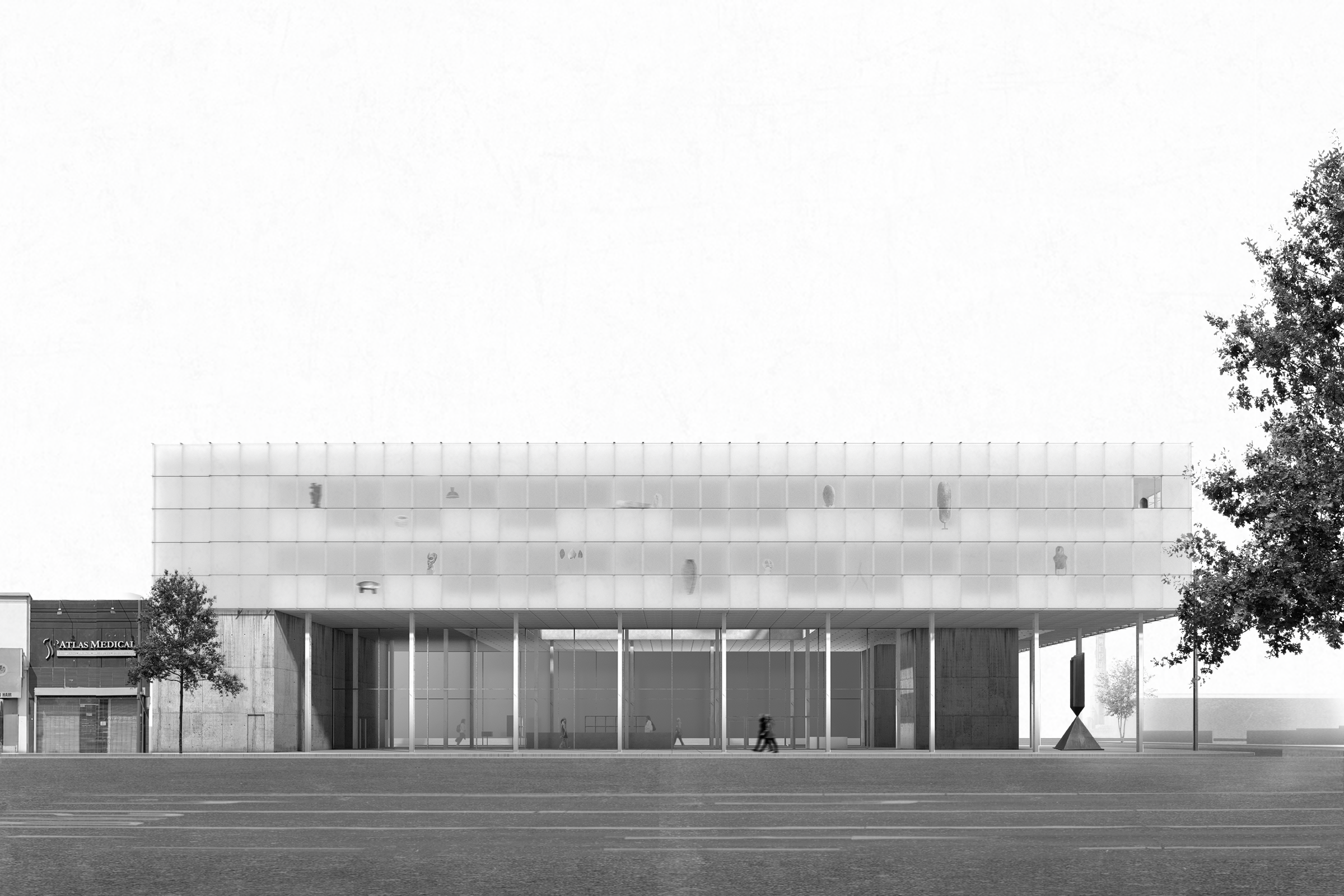
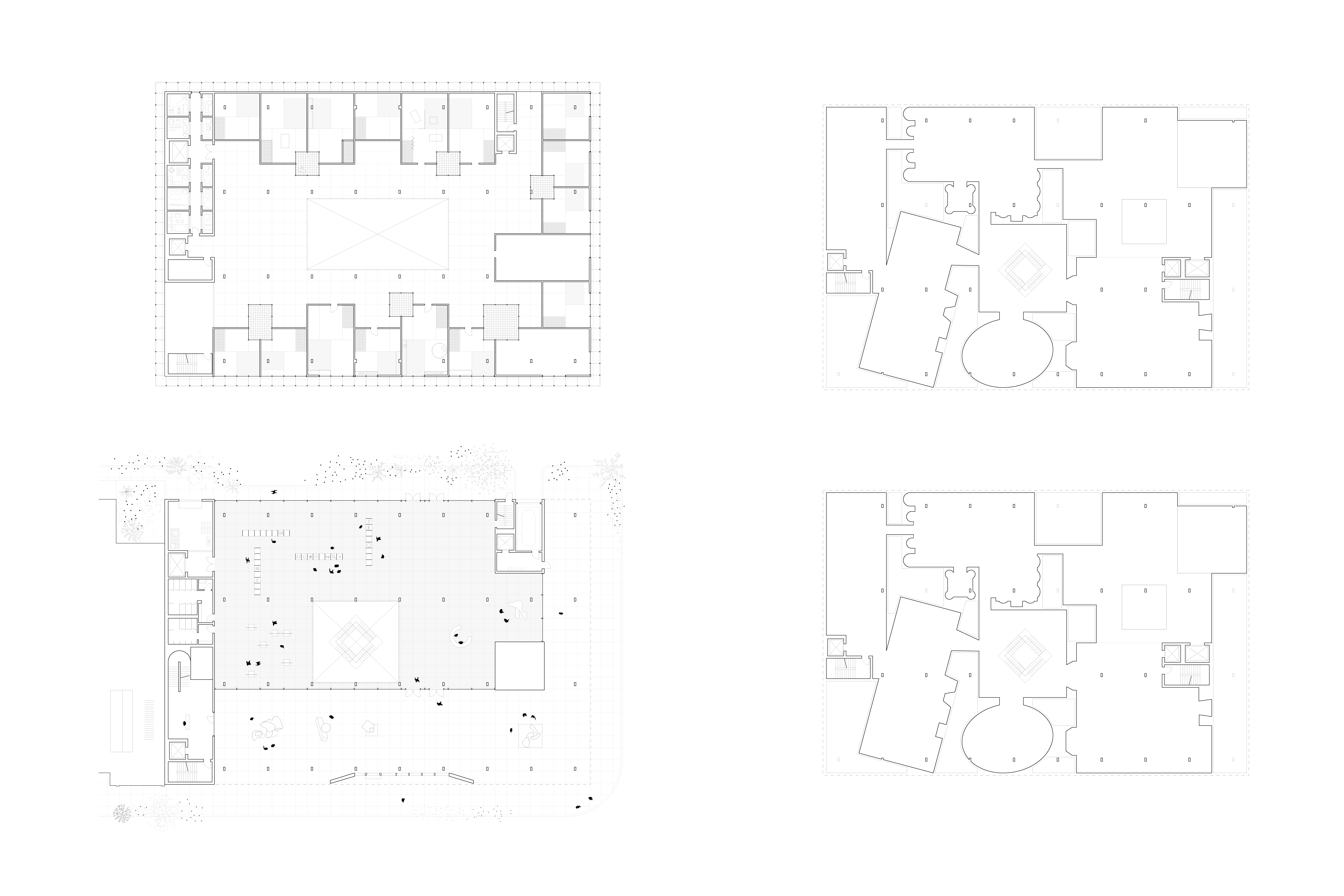
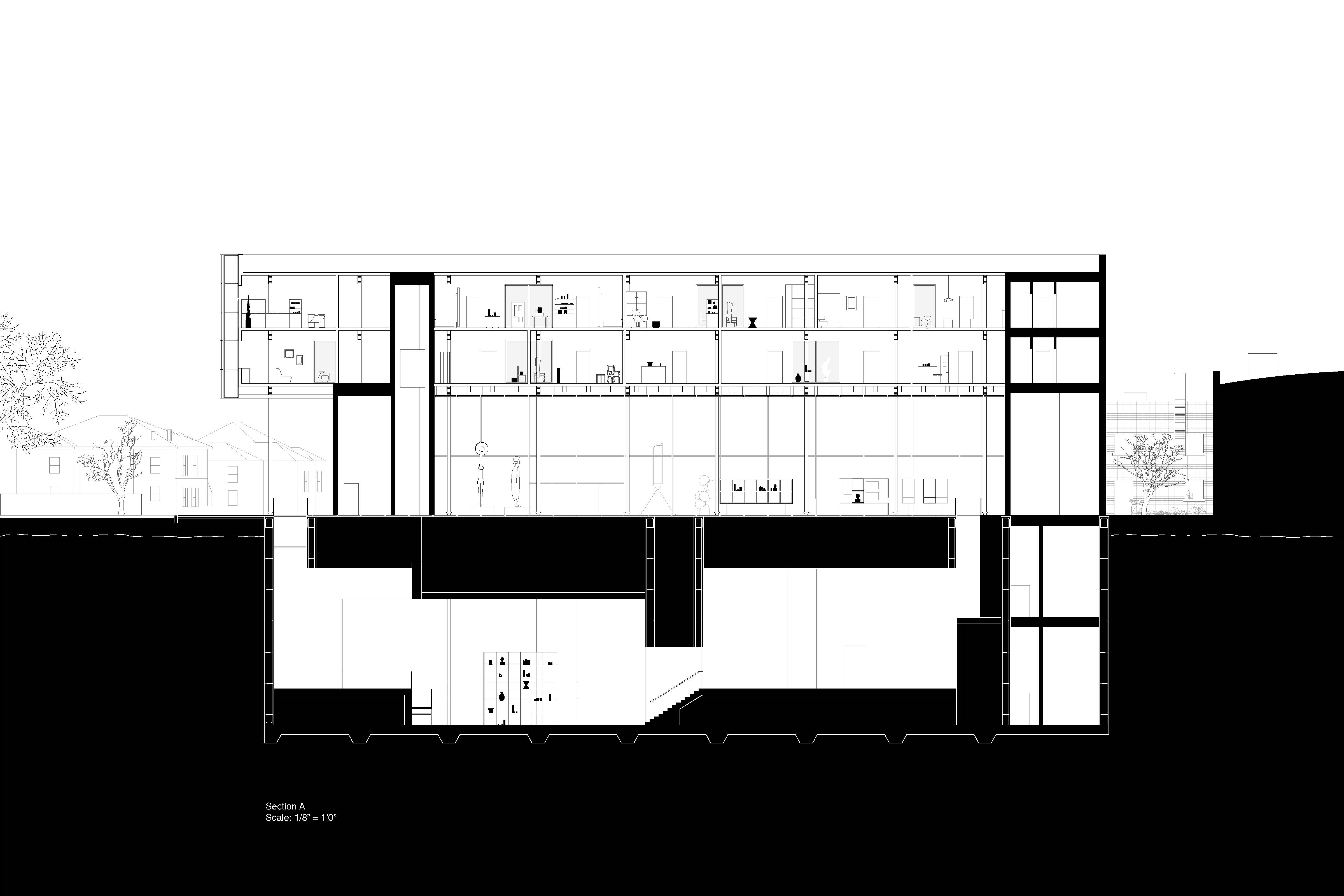
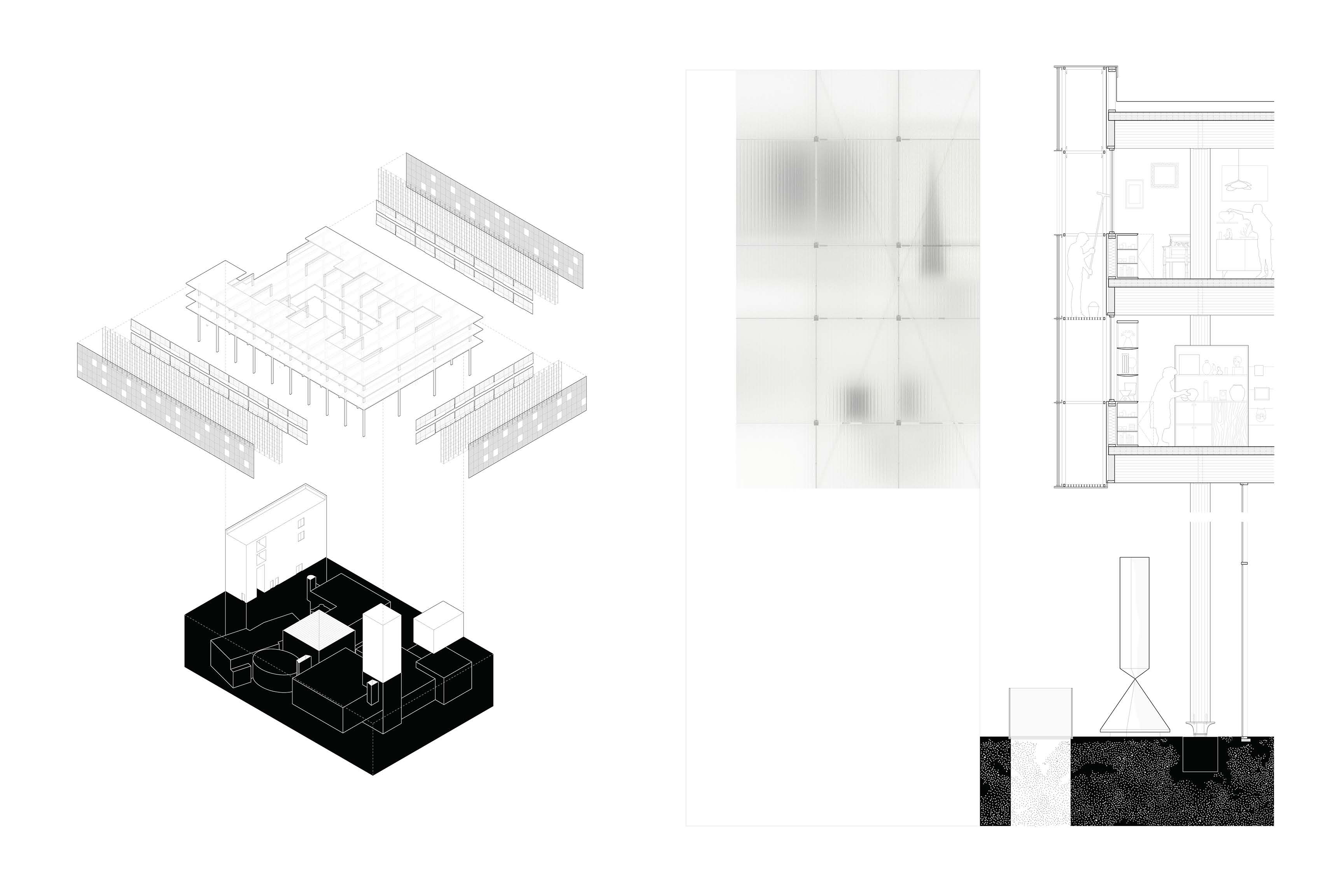
The project is organized around four interdependent zones—housing,
gallery, storage, and the grave—each operating as both a conceptual
framework and an architectural threshold. Both residents and the
California African American Museum (CAAM) contribute furniture, artwork,
vinyl records, and black memorabilia to the project. The curation of
objects is a communal act shared between residents and community
volunteers.
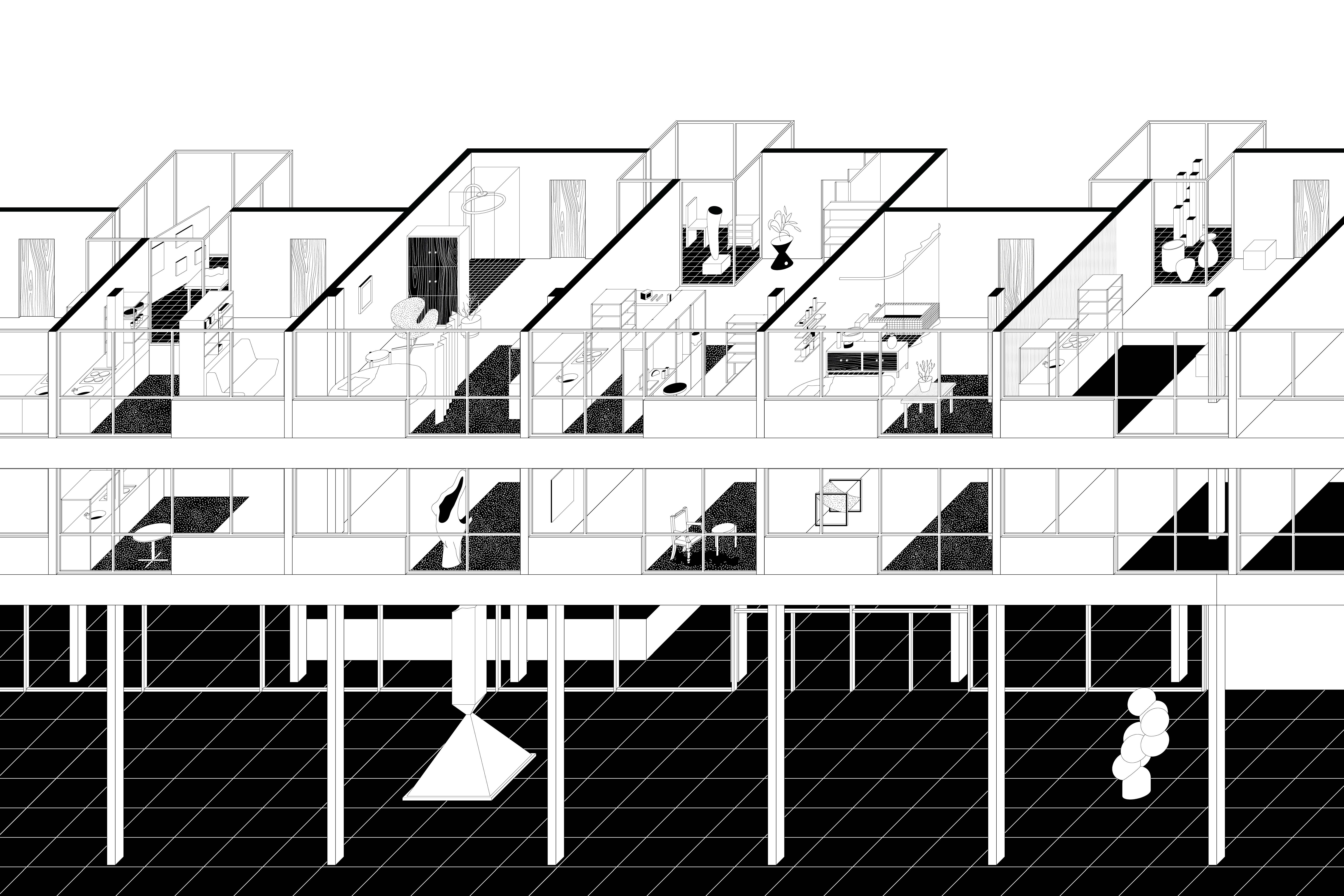
In the housing zone, personal collections drift between intimacy and
exposure occupying either private units or shared vitrines between
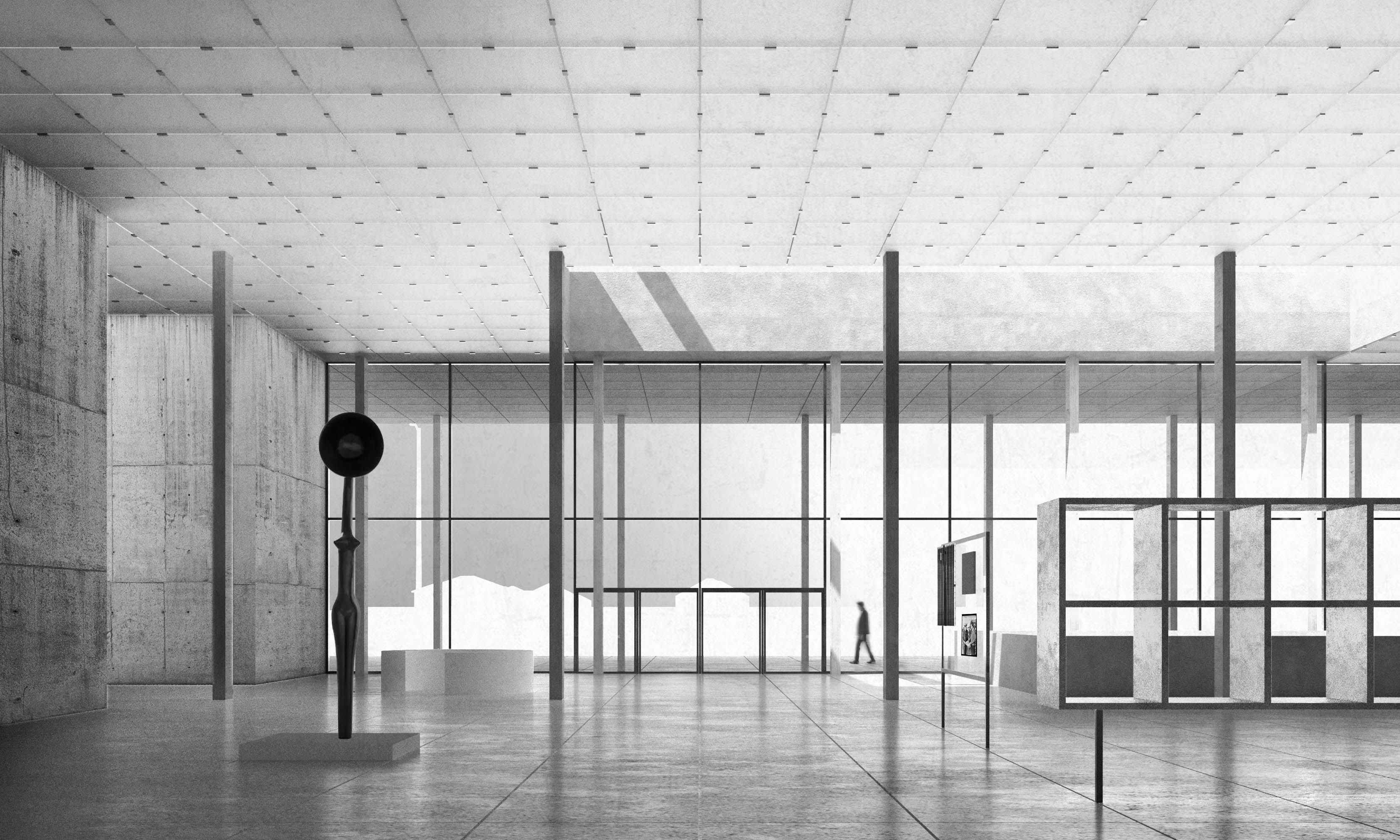
units. The gallery recontextualizes collections of objects as curated
exhibitions that formalize their public resonance. The storage is rigid
and monotonous, functioning as a repository where objects lie dormant,
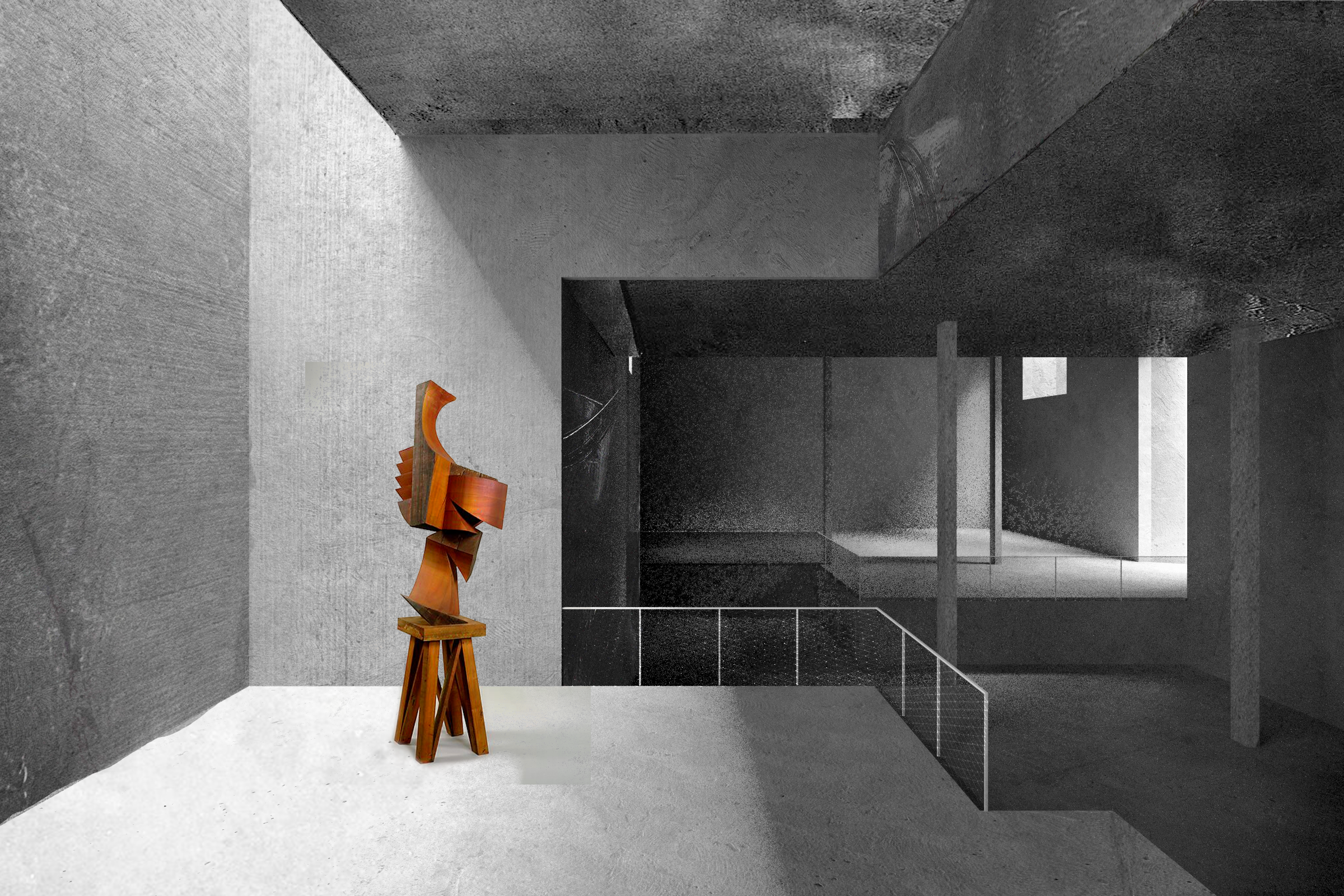
awaiting rediscovery. Below, the subterranean grave becomes a place of
remembrance, constructed with architectural fragments of Leimert Park’s
histories. As objects circulate, the building itself becomes a
performative and temporal place. Here, Leimert Park resists anonymity
and cultural erasure through the continual process of remembering,
exhibiting, and reinterpreting what we collect.